Periodontal Associates of North Florida
Could Diamonds be a Periodontist’s Best Friend?
 Dr. Colon routinely replaces missing teeth with dental implants here in our office. Dental implants are artificial tooth “roots” made of titanium, used to anchor dental prostheses, including crowns, and implant supported bridges and dentures. One of the largest factors in successful dental implant placement is adequate, healthy bone density to anchor the post.
Unfortunately, not all patients have the proper bone in their jaw to support a dental implant. Some patients suffer from Osteonecrosis, a disease caused by reduced blood flow to bones. When there is not enough blood flow, bone can start to die and break down. This makes dental implants for these patients particularly susceptible to becoming loose or failing. Osteonecrosis can be a side effect of chemotherapy.
Scientists from the UCLA School of Dentistry have discovered that nanodiamonds could be used for stronger dental treatments. Nanodiamonds are much smaller than those traditionally used in jewelry.
Currently, standard bone repair operations include inserting a sponge surgically to administer proteins that promote bone growth. This new study, led by Dr. Dean Ho, may have uncovered is an easier way to deliver these proteins. Nanodiamonds, which are invisible to the human eye, bind rapidly to the materials needed for bone growth. This process can be done through injection or an oral rinse, rather than surgery.
“This discovery serves as a foundation for the future of nanotechnology in dentistry, orthopedics and other domains in medicine,” said No-Hee Park, dean of the School of Dentistry. “Dr. Ho and his team have demonstrated the enormous potential of the nanodiamonds toward improving patient care. He is a pioneer in his field.”
Results from the study will most likely pave the way for more study. Either way, stay tuned to find out how diamonds are playing a role in oral health care.
Read the full article from UCLA’s newsroom here: http://newsroom.ucla.edu/portal/ucla/nanodiamond-encrusted-teeth-248066.aspx
Get to know Tina Malloy

Name: Tina Malloy, Hygiene Therapist
Number of years with practice: 17 yrs
Favorite part of working at your office: Meeting people & educating them
Alternate career, if you weren’t in dental? RN
Why did you decide to pursue a career in dentistry? Helping people!
First car: Pontiac Sunbird
Hobbies: Motorcycling
Favorite dental products you use: Colgate Products
What do you love to do in your spare time? Spend time with loved ones
All Oral Bacteria is Not Equal
The mouth harbors a diverse and plentiful and microbial community due to its hospitable environment. It is warm, nutrient-rich and maintains an ideal pH balance. This highly diverse microflora inhabits the various surfaces of the normal mouth- gums, teeth, tongue, and cheeks. What many people don’t realize is that most of the bacteria are beneficial organisms and live in harmony with each other and the human body.
The “Bad Guys” of Dental Bacteria
Interestingly, a new born baby’s mouth does not contain bacteria, but becomes colonized rapidly in the early stages of life. Nobody knows for sure how many different bacteria species there are. Estimates in the oral cavity alone vary between 500 to 650 different species. Only a few specific species are believed to cause dental caries, including Steptococcus mutans, considered the most important bacteria involved with tooth decay. However, the type of bacteria varies according to the progress of tooth destruction.
This harmful bacteria collect around the teeth and gums forming a sticky, creamy-colored mass called plaque. Some areas of the mouth collect plaque more commonly due to less salivary flow, such as grooves in molars and between teeth. The oral cavity actually contains the only known part of the human body that does not have a regulated system of shedding surfaces: the teeth. This allows plaque to adhere to the surface of teeth for long periods of time. At first, plaque is soft enough to come off easily with a toothbrush. However, it starts to harden within 48 hours. After about 10 days, the plaque becomes dental calculus, called tarter, and is now difficult to remove.
Villains Love Carbohydrates
Sugars from candy, soft drinks, and fruit juice can play a significant role in tooth decay. When sucrose (table sugar), the most common of sugars, coats the surface of the mouth, some intraoral bacteria interact with it. The result is lactic acid, which decreases the pH in the mouth. This demineralization allows for greater bacterial invasion deep into the tooth.
Cariogenicity, or the extent to which tooth decay is likely, depends heavily on how long the sugar remains in the mouth. Surprisingly, it is not the amount of sugar ingested but the frequency of sugar ingestion that is the most important factor in tooth decay.
Bacteria’s Kryptonite
Oral hygiene is key to battling the bacteria “bad guys”. Brushing your teeth twice a day will reduce dental plaque and food particles collecting around your teeth. Additionally, it is imperative to floss daily to wipe all your enamel surfaces free of plaque to discourage bacterial growth. Good general oral-health habits can usually prevent enough bacterial growth to keep tooth decay from starting.
If A Back Tooth Is Lost, Will You Miss It?
 A surprising number of Americans — some 70% of the U.S. population — is thought to be missing at least one tooth, usually one of the molars in back. But if you can’t see the missing tooth, does it truly matter? Perhaps unexpectedly, the answer is: Yes, it does!
The real problem with tooth loss isn’t esthetics (although that’s certainly an important consideration) — it’s the bone loss that comes with it. The alveolar bone, which surrounds the teeth, requires regular stimulation in order to stay healthy. Without such stimulation — which comes from tiny stresses transmitted by the teeth themselves — the bone gradually melts away. Tooth loss can cause a 25% decrease in bone width in the first year alone, and more in subsequent years.
What happens when bone is lost? If enough teeth are lost, the ability to speak and chew can be impaired. The contours of the face and lips change, making an individual look noticeably older and gloomier. Eventually, the bite may effectively collapse — along with the self-confidence!
Fortunately, there is way to keep tooth loss from becoming bone loss: it’s the dental implant. Because the implant actually becomes fused to the living bone, it helps keep bone healthy and functional — and it looks great too! Learn more by reading the Dear Doctor magazine article “The Hidden Consequences of Losing Teeth.”
Meet Christina Gordon
Please enjoy this interview with one of our new employees, Christina Gordon. We hope you’ll enjoy getting to know her as much as we have!
How long have you been with Periodontal Associates of North Florida?
Since July 2013
What’s your favorite part of working here?
The staff!
What would be your alternate career if you weren’t in dental?
Sales or Plastic Surgery.
Why did you decide to pursue a career in dental?
I wanted to work in an environment with lots of people.
What new procedure or technology are you most interested in learning more about?
LANAP. [learn more about LANAP here: www.tallahasseeperio.com/technology/gum-disease-laser-therapy]
What was your first car?
A Ford Mustang.
Where is your favorite place to shop?
Buckle.
What are your hobbies?
Doing activities with my daughter.
What’s your favorite dental product you use?
An Oral B electric toothbrush.
What is your favorite restaurant in town?
Osaka. [visit their website here: www.theosakasteakhouse.com]
What do you love to do in your spare time?
Go to the beach.
Thanks for sharing, Erica and welcome to the team!
Treating Difficult Areas of Periodontal Disease
Dear Doctor,
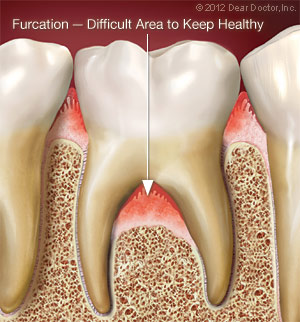
I’ve been having gum treatment for years, but there are teeth in my mouth that are still losing bone support. My periodontist has suggested localized antibiotics in these areas. Is this a good idea?
Dear Eric,
The goal of any periodontal treatment (“peri” – around; “odont” – tooth) is to keep the supporting structures of the teeth — gum, bone and the periodontal ligaments that join these tissues to the tooth roots — healthy. Bone loss around a tooth will jeopardize its very survival. Local antimicrobial or antibiotic therapy is a non-surgical treatment approach generally aimed at preventing further periodontal breakdown in difficult-to-treat areas or areas that have not responded well to more traditional treatment approaches.
– See more at: http://www.deardoctor.com/inside-the-magazine/issue-22/treating-difficult-areas-of-periodontal-disease/#sthash.x6Vqvfx8.eILVIhRg.dpuf
Teenagers & Dental Implants
 When is the right time to use implants to replace missing teeth?
Question: My daughter is 15 years old and is just finishing wearing braces. She is missing two of her upper front teeth which never developed. The orthodontist made space to have them replaced, but now we’re told she has to wait 2 to 3 more years before she can have implants. She desperately wants her teeth replaced. Why can’t implants be done now?
Answer: This is an important question and the current wisdom is not to have dental implants placed until jaw and facial growth are complete. Although it varies from person to person, growth of the jaws in most cases is not complete until late teens.
Continue reading the answer to this question here …
http://www.deardoctor.com/library/30114/?&issue=issue7&startid=44
The Latest Trailblazer in Dentistry—Lasers
 No longer reserved for science-fiction movies, lasers have revolutionized medicine and are now blazing new trails in dentistry. Ever since the Food and Drug Administration (FDA) approved the use of lasers in dentistry in 1991 for soft tissue surgery, their acceptance and use continues to grow. Now lasers are used for disease diagnosis; soft tissue (gums, lips, and tongue) procedures such as biopsies, reshaping gums, and removal of benign (non-cancerous) and malignant (cancerous) lesions; and hard tissue (enamel, dentin, and bone) procedures such as decay removal and cavity preparation of enamel and dentin of the teeth. Learn more about this revolutionary tool in “Lasers Shine a Light on Dentistry.”
Can Dentists Rebuild Bone?
 It is very important today to maintain “bone volume” following removal of a tooth. This helps to ensure that future implants can be placed in the best possible position. Today, most dentists are in agreement that when considering an implant after the removal of a tooth, a bone graft should be placed into the extraction site to prevent the very problem you are now encountering. Sufficient bone volume for implant placement (the part that replaces the tooth root) is vitally important to proper crown placement (the part that attaches to the implant and that you see in the mouth), resulting in the most natural looking and properly functioning tooth.
Dental Implants—Your Third Set of Teeth
 While implants were introduced into dental practices in the late 1970s, you may be surprised to know that the earliest recorded attempts of their use date back to the Mayan civilization around 600 A.D. Needless to say, dental implants have undergone giant leaps in improved design, success, and overall patient satisfaction since those ancient times! In fact, today’s dental implants actually integrate or fuse to the jawbone for the teeth they replace. And once integrated and functional, they can easily last a lifetime. Today’s implants are so successful they’re often referred to as your third set of teeth! Learn more in the article, “Dental Implants—Your Third Set of Teeth.”