Periodontal Associates of North Florida
The Story of Diabetes & Dentistry
 The Problem:
With more than 24 million diabetics and 57 million pre-diabetics in the United States1, nearly a quarter of the nation’s population, the connections between dental health and diabetes have never been more critical.
As an indicator of our general health, the rapidly rising rate of diabetes should be ringing alarm bells everywhere. In 2005 alone, the latest year of statistics compiled by the National Diabetes Information Clearinghouse, 1.5 million new cases of diabetes were diagnosed in Americans over the age of 20.2.
Presenting Dental Implant Treatment Plans for Patient Understanding and Acceptance
 When properly cared for by brushing, flossing, and regular dental visits, teeth replaced by dental implants can last as long as all of your weIl-cared for natural teeth, perhaps the rest of your life. When put in common sense terms such as these, patients begin to appreciate the true value and cost effectiveness of tooth replacement with dental implants. In this fashion, by educating patients rather than “marketing” them, patients will generally choose the dental implant treatment plan, recognizing that it is truly in their own best interest.
Gum Disease, Do You Know the Signs?
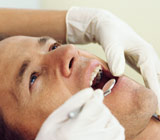 Understanding the signs of gum disease can prevent needless worry and potentially save you both time and money for treatment. While many people think bleeding gums is caused by brushing too hard, the truth is that you would have to brush extremely hard to make healthy gums bleed. Bleeding when brushing, flossing, or even eating is a warning sign of gum disease. Other common symptoms include redness, swelling, and even having bad breath. The later signs of advanced gum disease include discharge (pus) between your teeth or gums, gums that are pulling back (gum recession) or away from your teeth, and even loose teeth. And to make matters worse, if you are a smoker, gum disease accelerates more rapidly. Whether you have one or several of these warning signs, you need to schedule an appointment as soon as possible for a thorough examination and treatment plan for returning your mouth to good oral health! Learn more by reading “Warning Signs of Periodontal (Gum) Disease.”
Dental Implants – The Best Tooth Replacements in History
 Nobody really wants to live with missing teeth. So, throughout history, human ingenuity has come up with various ways of replacing them — from seashells (the Mayans) to ivory dentures (the 18th century.) If your parents lost a tooth, they probably had only one good choice for its replacement: the three-unit fixed bridge. But today there’s an even better option available — the dental implant.
Read full article at Dear Doctor
Understanding Gum Disease… Is It Affecting YOU?
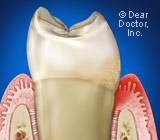 Periodontal disease affects over 90% of Americans each year and the reality is that you will experience some form of it over the course of your life. The only question is to what degree. The main culprit of the disease is dental bacterial plaque, the biofilm that results when bacteria concentrate at the gum line in everyone’s mouth.
Think of your mouth as an ecosystem with your own oral tissues living alongside millions of bacteria. However, without thorough brushing, flossing, and routine dental cleanings, this balance can tip towards the first stage of periodontal disease—gingivitis or inflammation of the gingiva (gums). Without proper treatment, gingivitis can evolve into periodontitis, that can result in teeth becoming loose and possibly lost. Learn more in this comprehensive article “Understanding Gum Disease.”
Dental Implants: Your Premier Option for Tooth Replacement
 You can easily see what an unsightly gap a missing tooth leaves — but that’s really just the first sign of trouble ahead! Far more worrisome is the fact that tooth loss is generally followed by loss of bone in the jaw. This may lead to greater problems with the bite, and eventually, changes in facial appearance. When you need to replace a missing tooth, a dental implant is the premier option. Why?
Dental implants look and feel just like your natural teeth. More important, they don’t decay, are relatively free from gum disease, and can last a lifetime. But perhaps the best reason for choosing implants is that they help preserve the tooth-supporting bone structure that would otherwise begin to deteriorate after a tooth has been lost.
Experience Less Postoperative Pain with Laser-Guided Dentistry
 The impact of laser technology has been rapidly growing since the mid-1960s when it was first introduced in the healthcare sector as a surgical tool. Using LASERS, short for Light Amplification by Stimulated Emission of Radiation, we are now able to perform procedures on the soft tissues of the mouth with patients reporting less postoperative pain than traditional methods. The reason for this success is due to the fact that laser procedures minimize bleeding, swelling, scarring, and pain. Learn more about this cutting-edge technology in “Laser-Guided Dentistry.”
Cone Beam Computed Tomography
 Computed tomography (CT), and the three-dimensional images it provides, was developed in 1973. The technology, while primitive, was amazing to the practitioners involved. Those practitioners where at a loss of how to apply CT, and had no idea of the profound effect it would have on the surgical and medical community. It took several years of development and a new segment of the specialty of radiology, but CT has become an integral part of surgical treatment of the patients of today.
Dental Implant Surgery
 Many people are surprised at how relatively easy dental implant surgery is because they let their imaginations get the better of them before they go through the actual procedure. The reality is that most patients experience no pain during the surgery and very little discomfort afterward.
The Warning Signs of Periodontal (Gum) Disease
 As any dentist or medical professional will tell you, Benjamin Franklin gave great advice that is still true today when he said, “an ounce of prevention is worth a pound of cure.” The first tell tale sign of periodontal disease is bleeding gums when brushing your teeth or flossing. Unfortunately, most people ignore this sign because they think that they’re brushing or flossing too hard. Bleeding gums reveal you have gum disease as healthy gum tissue doesn’t normally bleed. And it only takes gentle brushing and flossing the right way to remove dental bacterial plaque, not hard scrubbing. If left untreated, your condition may develop into periodontal disease: disruption and loss of attachment of the gums and bone support which “unzip” from the teeth creating pockets of infection. Learn more by reading “Warning Signs of Periodontal (Gum) Disease.”