Periodontal Associates of North Florida
Understanding the Factors that Can Influence Implant Success
 Replacing a missing tooth with an implant has numerous advantages over other treatment options. However, even with a success rate of well over 95%, there are numerous factors that can influence your personal success rate. For example, patients who are non-smokers and in general good health tend to have fewer issues and better healing than patients who smoke. Your medical history is also a factor; patients who have diabetes, osteoporosis, or have compromised immune (resistance) systems are at greater risk of complications with healing or even of being unable to have dental implants.
Discover the facts in Implant Success Rate.
Video about Dental Implants provided by Dr. Colón (#5)
Treating Ongoing Periodontal (Gum) Problems
 If you have been informed that you have periodontal disease, it is helpful to understand some of the aspects of treatment. One of the first and possibly the most important is behavior change. Simply put, you must make changes in your oral hygiene routine to prevent or limit future disease. The next aspect of treatment typically is removing the calculus or tartar and other bacterial toxins that have become ingrained into the root surfaces of your teeth. Periodontal cleaning, root planing by ultrasonic and hand scaling instruments, will be carried out usually with local anesthesia (mild numbing of the affected areas). These painless procedures promote infection control and healing while requiring little more than aspirin or ibuprofen for a day or two following treatment. Learn about other treatment options in “Understanding Gum (Periodontal) Disease.”
The Effects of Pregnancy and Birth Control on Gum Disease
 The effects of dental bacterial plaque biofilm are especially apparent in some pregnant women during their first trimester. This condition known as pregnancy gingivitis even occurs in women who are not pregnant but take certain birth control medications. The reason these women experience this issue is typically the same for both categories. The increased elevation of female hormones (estrogen), causes blood vessel changes in their gums making them more susceptible to the effects of bacteria. The good news is that good oral hygiene, regular dental check-ups and cleanings are the best method for discovering and treating these problems. Learn more about this topic that literally affects millions of women in “Pregnancy & Birth Control.”
What is a Dental Implant?
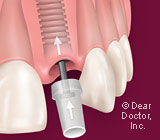 You may have heard the term “dental implant,” but do you really know what it is? Teeth essentially can be thought of having two main parts: the crown, the part of the tooth that can be seen above the gum tissues, and the root, the part that is suspended in the bone by periodontal ligament (“peri” = around; “odont” = tooth) that keeps the tooth in place. A dental implant is a tooth replacement system in which an extracted tooth and its root are replaced with a new metal “root” (implant) that is typically made of titanium. The new tooth, usually made of porcelain, is then attached to the implant via a retaining screw and abutment connector. Learn more by reading “What Is a Dental Implant?.”
Video about Dental Implants by Periodontal Associates of North Florida (#4)
Implant Site Preservation – A Key To Implant Success
 Since the introduction of dental implants into North America in the early 1980’s, we have witnessed an evolution in how implants are used to replace missing teeth. At the outset, implants were seen as a means to provide support to overdentures for edentulous patients. Subsequently, implants began being considered for single tooth replacement and even full arch dental replacement. In the infancy of this type of usage, implants were generally placed in the most available area of bone without regard to prosthetic restorability. As it became apparent that many of these restorations were not very functional and were difficult to maintain, implant dentistry became a much more prosthetically driven discipline.
The Art & Science of Periodontal Surgery
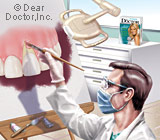 The goal of periodontal surgery is to restore and regenerate normal form and function to the supporting structures of the teeth when they have been lost and/or damaged by periodontal (gum) disease. This includes your gum tissue, periodontal ligament, and bone. While the only monitor for periodontal (gum) disease is controlling daily bacterial plaque, this type of surgery is aimed at treating the defects resulting from the disease thereby creating a more favorable environment around your teeth for daily oral hygiene and professional maintenance. To determine whether or not you require periodontal surgery, we will conduct an examination using a periodontal probe to check for pocketing, the detachment of the gum tissue along the sides of your teeth. Learn more about this surgical option that can help change your smile while returning good oral health in “Periodontal Surgery—Where Art Meets Science.”
New Technology for Rebuilding Bone
 The news may be shocking for some but bone regeneration for implant dentistry is a routine procedure in periodontal and oral surgery. With new technology, grafting materials are able to regenerate lost bone with predictable results. This ability is critical for patients who need to replace missing teeth but lack enough bone for anchoring implants. Learn more about the process of guided bone regeneration plus some questions to ask our office should you find yourself lacking sufficient bone volume for an implant in this article, “Can Dentists Rebuild Bone?”
Understanding the Relationship between Periodontal Disease and Diabetes
 Because diabetes negatively impacts the immune system’s normal response to inflammation and wound healing, it can also wreak havoc in your mouth through periodontal (gum) disease. In fact, if left untreated, periodontal disease can cause bone loss and eventually the loss of teeth—regardless of whether or not you are diabetic. These reasons make it critical, especially if you are diabetic, pre-diabetic, or if diabetes runs in your family’s medical history—that you understand what periodontal disease is, its causes, and its relationship to your overall health. Learn more by reading “Periodontal Disease—More than a Mouth-Full.”